
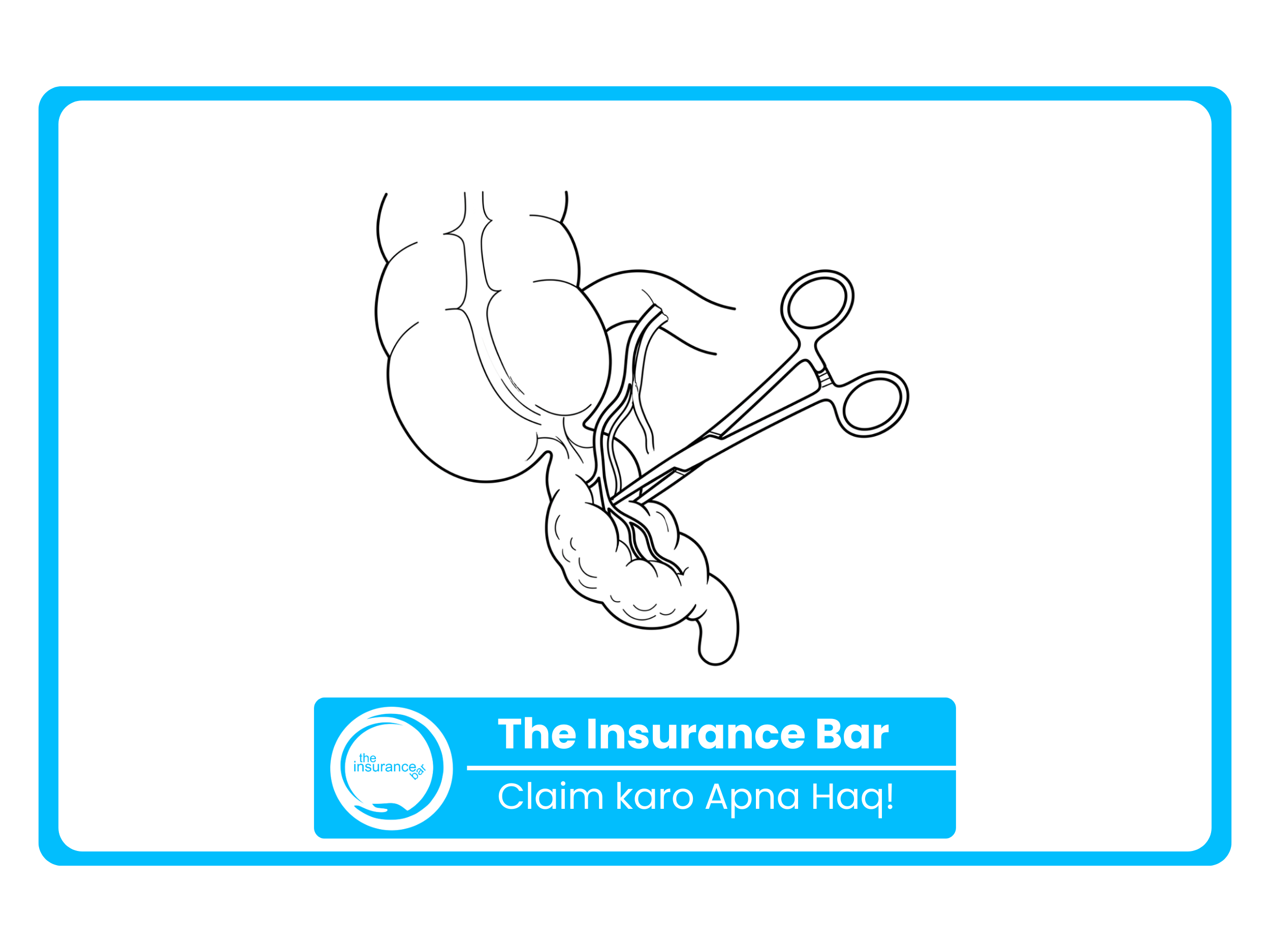
This case involved the wrongful repudiation of a critical emergency surgery under a standard 2-year waiting period clause for specific ailments. The insurer mechanically applied the exclusion to acute ruptured appendicitis without evaluating the life-threatening nature of the admission. By presenting unequivocal medical evidence of the emergency and citing relevant consumer protection jurisprudence, the repudiation was swiftly overturned at the pre-litigation stage, securing a 100% financial recovery for the policyholder.
Case Snapshot
| Parameter | Details |
| Claim Amount | ₹3,45,000 |
| Cover Amount | ₹10,00,000 |
| Diagnosis | Acute Ruptured Appendicitis with Peritonitis |
| Rejection Reason | 2-Year Specific Ailment Waiting Period |
| Forum | Insurer’s Grievance Redressal Committee (Pre-litigation Escalation). |
| Outcome | Repudiation Overturned; Full Recovery Approved |
| Resolution Time | 4 Weeks (Pre-litigation) |
Background
Mr. Rajesh Sharma, a 42-year-old IT professional, purchased a comprehensive family floater health plan. Barely 45 days post-inception, he suffered a sudden collapse and was rushed to a tertiary care hospital. Emergency diagnostics revealed a ruptured appendix requiring immediate, life-saving surgical intervention.
Unique Information / Rejection Reason
The insurer issued a complete denial, citing standard policy terms: a 24-month waiting period for the surgical treatment of appendicitis. The claims processing team treated the sudden acute rupture exactly the same as a chronic, planned surgical intervention. This demonstrated a severe lack of medical application and a rigid reliance on automated claims processing.
Documents Reviewed
We conducted a forensic review of the ER admission notes, surgical operative notes, the final discharge summary, and the initial proposal form. Crucially, we obtained a specialized “Emergency Certificate” from the lead surgeon. This document legally confirmed the immediate risk to the patient’s life had the surgery been delayed.
Legal Analysis / Why the Rejection Was Challenged
The rejection blatantly violated the core tenets of the IRDAI Regulations protecting policyholders. We cited established DCDRC rulings which clearly distinguish between ‘elective’ procedures (which are rightfully subject to waiting periods) and ’emergency’ procedures. The insurer’s failure to apply clinical judgment constituted an unfair trade practice and a clear deficiency in service under the Consumer Protection Act, 2019.
Strategy Adopted & Outcome
A robust legal notice was served, heavily leaning on the treating doctor’s emergency certification and judicial precedents favoring the insured in life-or-death scenarios. We threatened immediate escalation to the Consumer Commission for punitive damages and legal costs. The insurer’s grievance redressal committee reviewed the escalated file, reversed the TPA’s desk decision, and sanctioned the full ₹3,45,000 claim amount.
FAQs
1. Does the 30-day initial waiting period apply to accidents and emergencies?
No. Under IRDAI mandates, standard initial 30-day waiting periods expressly exempt accidental injuries, they are covered from Day 1. However, for acute, non-accidental medical emergencies (like a sudden illness) in this 30-day window, standard policy wording technically allows insurers to reject the claim. While highly contested, some consumer courts have overturned these rejections if the illness was entirely unforeseeable, though it remains a tough legal battle.
2. Can an insurer reject a specific ailment (like a hernia or appendicitis) if it becomes a sudden emergency?
While policies list specific diseases under 1-year or 2-year waiting periods, courts frequently rule that these exclusions are meant to prevent fraud regarding planned, elective surgeries. Acute, life-saving interventions for these exact same conditions can and should be successfully contested.
3. What is the most crucial document to fight an emergency waiting period rejection?
An explicit “Emergency Certificate” or a detailed, stamped note from the treating surgeon is your strongest weapon. It must state unequivocally that the admission was sudden, unforeseeable, and the procedure could not be deferred without severely risking the patient’s life.
Leave a Reply