
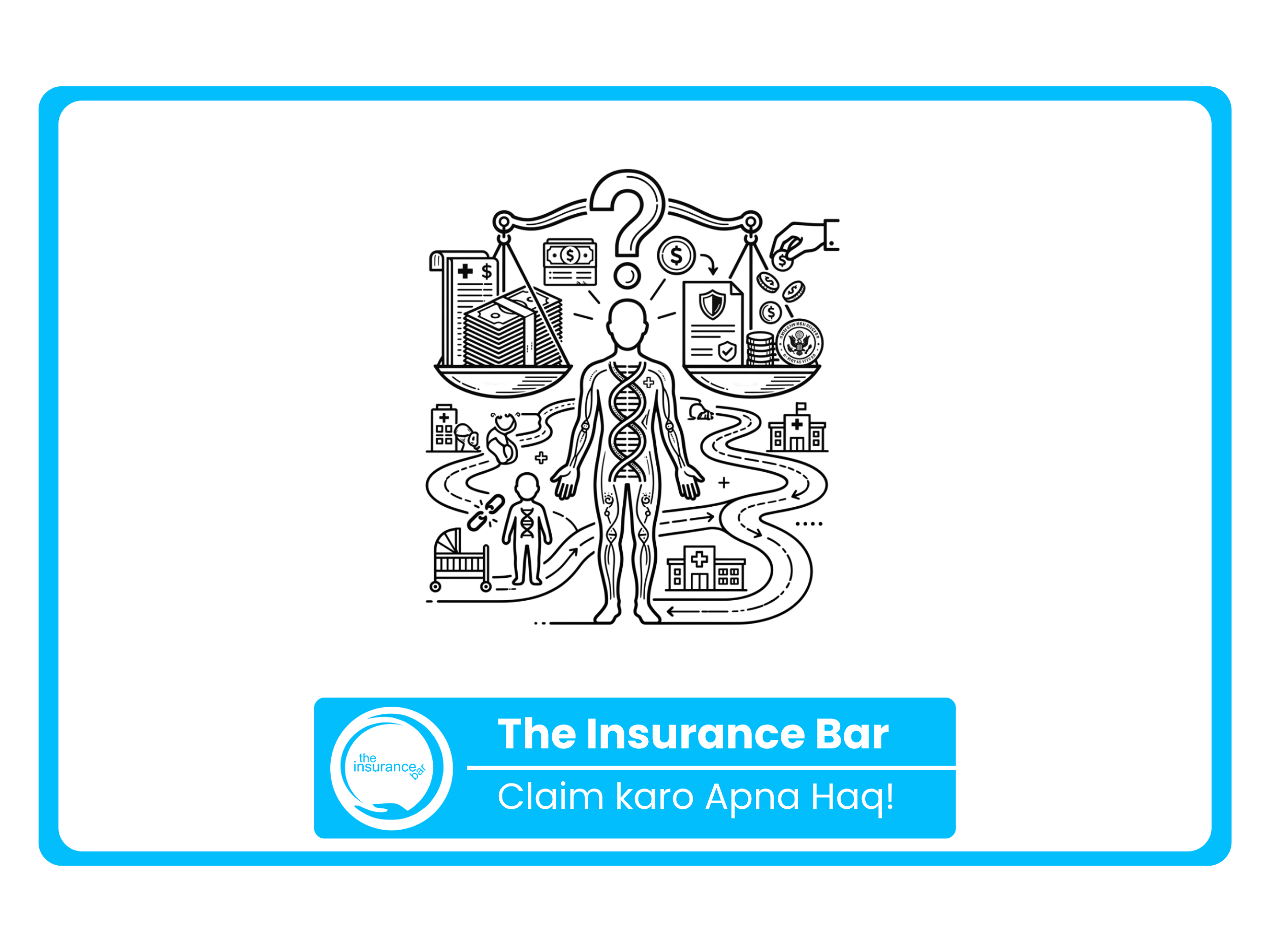
Riya and Karan’s 3‑year‑old daughter, Myra, has just been diagnosed with an inherited metabolic disorder. Her treatment protocol involves regular transfusions, special medical foods, periodic hospital stays, and constant monitoring. Her doctors are clear: “This is lifelong. There is no one‑time cure, only ongoing management.”
Their first reaction is a hopeful one: “Our health insurance will cover it, right?”
But as the months pass, they realize a harsh truth. While their policy pays for major hospitalizations, the crushing everyday realities—OPD visits, expensive therapies, and specialized diets—are often excluded, severely capped, or quickly exhaust their sum insured.
In India, out-of-pocket healthcare expenses account for nearly half of all medical spending. For many genetic and congenital disorders, the compounding costs of chronic care over years can far exceed the cost of occasional surgeries. Sadly, most families never planned for that.
Where Families Like Riya and Karan Go Wrong
Navigating insurance with a chronic condition is a steep learning curve. Families often stumble in these critical areas:
- Assuming “lifelong treatment” equals “lifelong full coverage.”
- Ignoring OPD and rehabilitation exclusions hidden in the fine print.
- Underestimating the true, compounding costs of chronic care over a decade.
- Buying the “cheapest” generic plan rather than one tailored to specific medical needs.
The Reality Check: What Do Health Insurance Policies Actually Cover?
Depending on the policy you hold, your financial experience with a congenital or genetic disorder will look very different. Here are the two most common scenarios:
Scenario 1: Comprehensive Plans with OPD and Chronic-Care Focus
Premium plans designed with chronic care in mind offer a much wider safety net. These typically include:
- In-patient hospitalization for major procedures or complications.
- Day-care treatments such as scheduled transfusions, injections, or enzyme‑replacement therapy.
- OPD benefits for follow‑up specialist visits, physiotherapy, speech therapy, or nutrition consultations.
- Restoration benefits that replenish the sum insured once it is exhausted within the policy year—vital when expensive therapies repeat.
- A quick caveat on medical foods: Some plans offer limited coverage for special dietary supplements, but only if explicitly mentioned as a medical necessity. In the Indian market, these are notoriously difficult to claim, so managing expectations here is key.
Scenario 2: Basic Hospitalisation-Only Plans (The Most Common)
Much more commonly, families hold a standard, bare-bones policy:
- It pays for traditional admissions, surgeries, and basic day‑care procedures.
- All regular costs—like OPD visits, routine therapies, frequent tests, and special diets—are paid entirely from your own pocket.
- The child’s genetic disorder is technically “covered,” but in practice, only a tiny fraction of the actual yearly medical expense is reimbursed.
A Practical Guide to Planning for Lifelong Healthcare Costs
1. Look Specifically for “OPD-Plus” or Chronic-Care-Friendly Plans
When choosing or upgrading your policy, explicitly look for coverage for OPD consultations, day-care therapies, and rehab services (physiotherapy, speech therapy). Prioritize these vital features in your policy document over saving a few rupees on your premium.
2. Check Annual Limits and Restoration Benefits
Don’t just look at the base cover. Ask your insurer:
- “Does this plan include restoration of the sum insured, and under what conditions?”
- “Can the restore trigger more than once in a year, or only upon complete exhaustion?”
- For high, recurring costs, a larger base sum insured combined with an excellent restoration feature will always beat a small cover with a lower premium.
3. Understand Waiting Periods for Genetic Conditions
As per IRDAI guidelines, genetic disorders cannot be permanently excluded. However, you must confirm:
- The exact waiting period for pre‑existing genetic or congenital disorders.
- What is covered after that period (inpatient only, or OPD/day-care as well).
4. Maintain Impeccable Records
Keep every single OPD bill, therapy invoice, dietician note, and prescription. For plans that allow OPD or day‑care claims, highly disciplined documentation is usually the difference between a swift approval and a frustrating rejection.
5. Layer Your Coverage Strategically
Consider adding a Super Top-Up policy to handle massive annual bills once your base sum insured runs out. You might also evaluate Critical Illness covers, but only if they explicitly include your specific condition and pay out a lump sum that is genuinely useful for ongoing chronic care.
Claim Rejected? Here Are Your Legal Options
Despite having the right paperwork, insurers sometimes unfairly underpay or deny claims for chronic conditions. If this happens, you have a clear legal and regulatory escalation path in India:
- Insurer’s Grievance Cell: Your first step is an internal escalation.
- IRDAI Grievance Redressal: Use the Bima Bharosa (IGMS) portal or call center.
- Insurance Ombudsman: A powerful, cost-free route for claims up to ₹30 Lakhs.
- Consumer Court / Civil Court: The final legal step for larger disputes.
Reduce the Hassle with The Insurance Bar
Rather than discovering too late that a “basic” plan barely touches everyday costs, families can align their coverage with the reality of lifelong treatment by partnering with The Insurance Bar.
We support families like Riya and Karan by:
- Reviewing existing policies to identify dangerous gaps in OPD, day‑care, therapy, and restoration benefits.
- Leveraging IRDAI guidelines to prevent insurers from outright denying valid genetic disorder claims.
- Building and presenting robust claims so that modern treatments and recurring therapies are argued effectively as medically necessary.
Don’t let the cost of lifelong care drain your family’s future. Work with The Insurance Bar to fight effectively for what you are rightfully owed.
Frequently Asked Questions (FAQs)
Does health insurance cover genetic disorders by default in India?
Yes. As per a landmark IRDAI mandate, health insurance companies can no longer completely exclude genetic disorders from their policies. However, coverage is still subject to standard waiting periods and the specific terms (like OPD limits) of your chosen plan.
What is the waiting period for congenital diseases?
Internal congenital diseases (conditions present at birth) are usually treated similarly to pre-existing diseases. The waiting period for genetic or internal congenital disorders is now strictly capped by IRDAI at a maximum of 3 years (36 months).
Will my insurance pay for special medical diets or nutritional foods?
In most standard Indian health insurance policies, dietary supplements, medical foods, and vitamins are excluded unless they are an integral part of an in-patient hospital stay. If your child requires an expensive lifelong medical diet, you must look for premium OPD-plus plans and explicitly check the policy wordings for nutritional coverage.
Leave a Reply