Author: The Insurance Bar

  • ₹1.11 Lakh Health Insurance Claim Rejected for Alleged Misrepresentation Successfully Resolved

    ₹1.11 Lakh Health Insurance Claim Rejected for Alleged Misrepresentation Successfully Resolved

    A ₹1,11,725 health insurance claim for Viral Hepatitis treatment in Pune was repudiated due to vague allegations of “misrepresentation and discrepancies.” Following a formal challenge before the District Consumer Disputes Redressal Commission (DCDRC), the insurer failed to substantiate the claims with verifiable evidence. Consequently, the repudiation was overturned, and the full claim amount was successfully approved for the policyholder.

    Case Snapshot

    ParameterDetails
    Claim Amount₹1,11,725
    Cover Amount₹10,00,000
    DiagnosisViral Hepatitis and Thrombocytopenia
    Rejection ReasonMisrepresentation and Discrepancies
    ForumDistrict Consumer Disputes Redressal Commission (DCDRC), Pune
    OutcomeRepudiation overturned; Claim approved in full
    Resolution TimePost-August 2024

    Background

    Mr. Abhishek Ronge, a resident of Pune, held a health insurance policy with a sum insured of ₹10 lakh. In July 2024, he experienced a severe medical emergency characterized by high-grade fever, persistent vomiting, severe body ache, and a dangerously low platelet count.

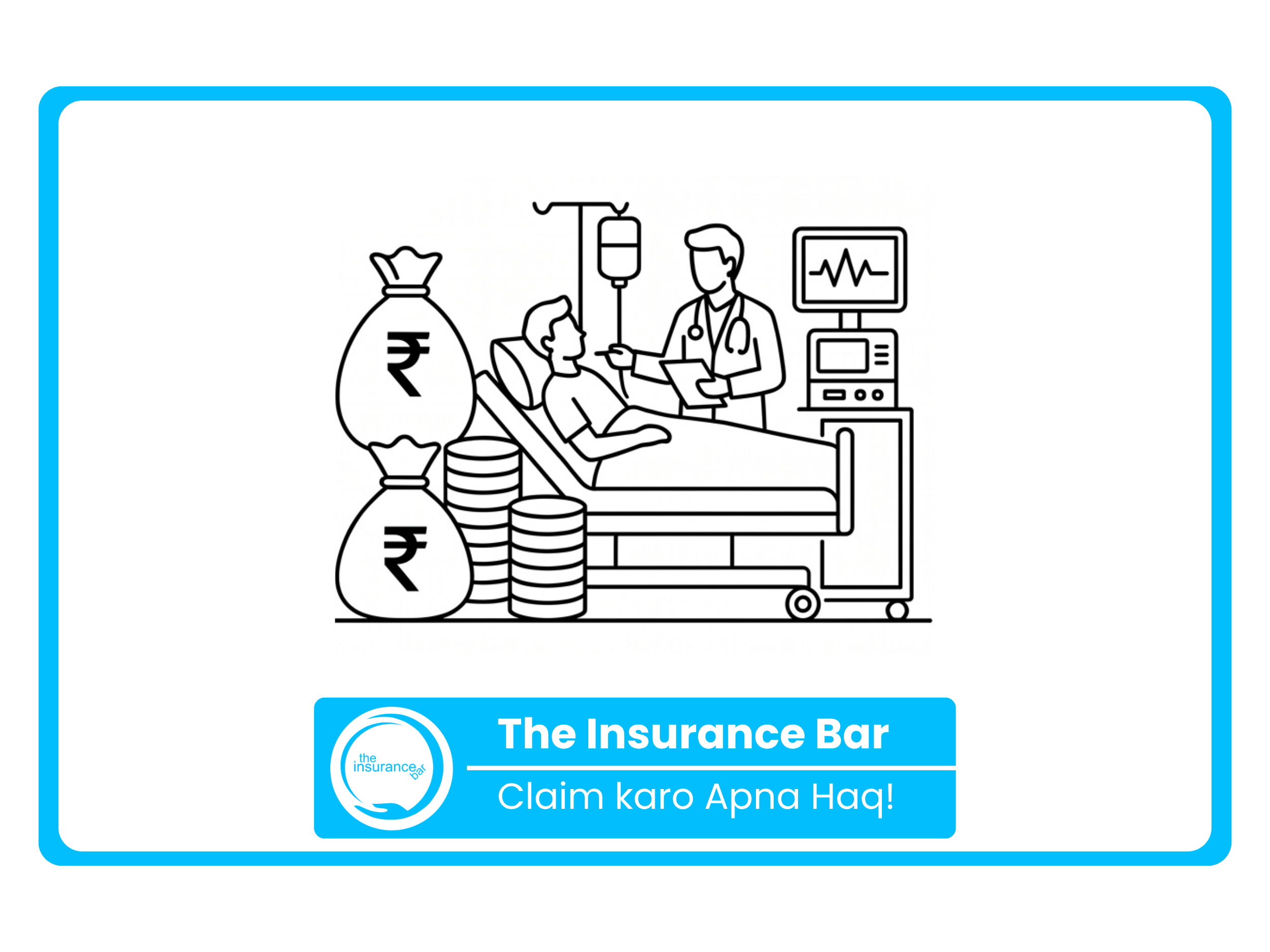
    Upon medical evaluation, he was formally diagnosed with Viral Hepatitis and Thrombocytopenia. Following the advice of his attending physicians, Mr. Ronge was hospitalized for six days to manage the acute condition. After his successful discharge, a reimbursement claim of ₹1,11,725 was submitted to the insurance company to cover the legitimate hospitalization expenses.

    Unique Information / Rejection Reason

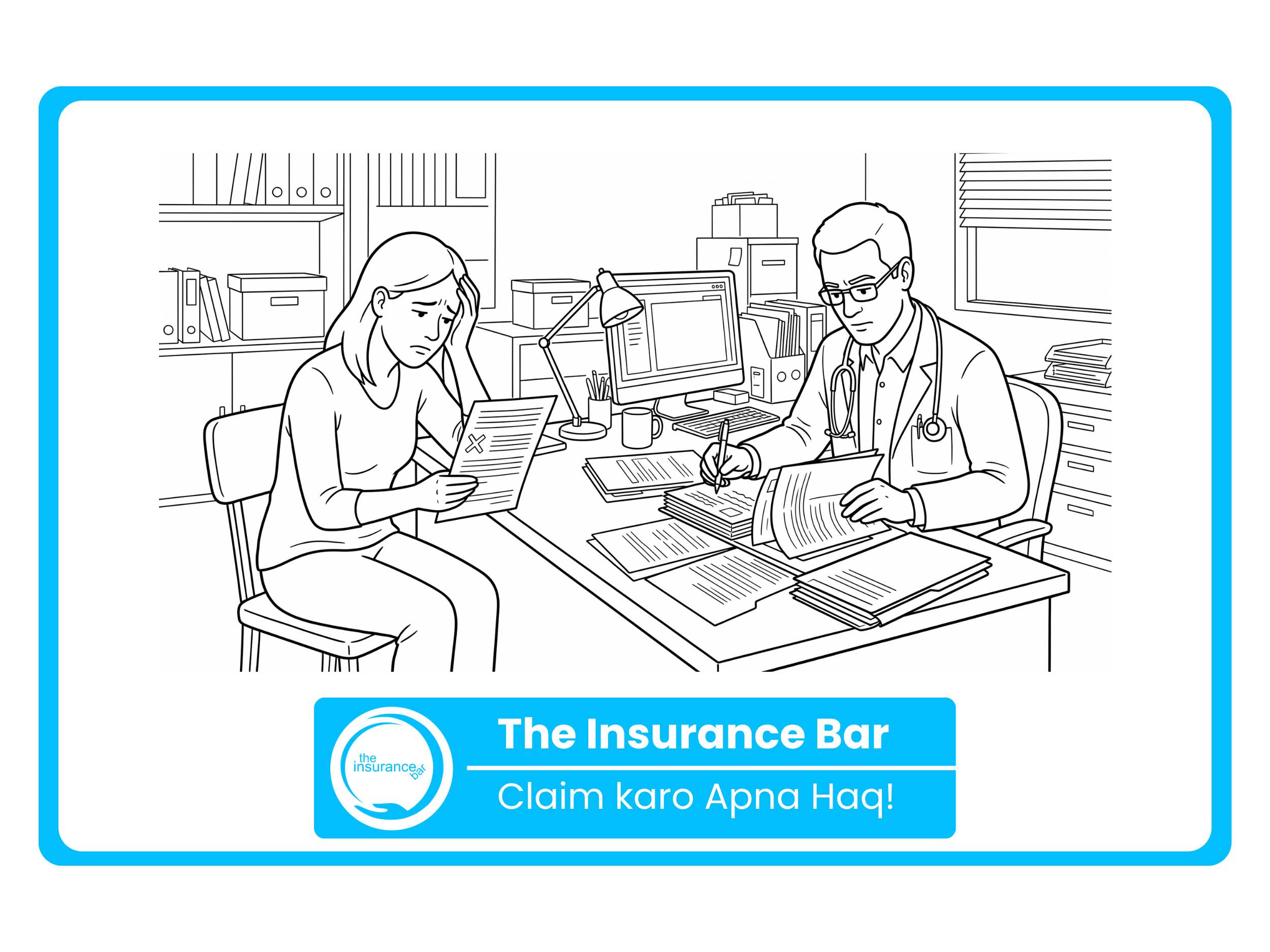
    Instead of processing the claim based on the medical evidence, the insurer issued a repudiation letter in August 2024. The stated reason for claim denial was generic “Misrepresentation and Discrepancies.”

    Notably, the insurance company’s rejection letter lacked specific details regarding the alleged violation. The insurer did not specify which submitted document contained a discrepancy, nor did they outline the exact nature of the supposed misrepresentation. Furthermore, the insurer did not request any preliminary clarification from the policyholder before outright denying the claim.

    Documents Reviewed

    To build a comprehensive factual record, the following evidentiary documents were thoroughly reviewed:

    • The health insurance policy schedule and relevant coverage wordings.
    • The duly filled health insurance claim form.
    • The hospital discharge summary detailing the six-day admission.
    • Diagnostic reports confirming Viral Hepatitis and Thrombocytopenia.
    • The insurer’s August 2024 repudiation letter and subsequent correspondence.

    Legal Analysis / Why the Rejection Was Challenged

    Under Indian insurance laws, insurers generally need to support allegations of misrepresentation with concrete evidence and explain the specific basis of repudiation. The burden of proof typically lies with the insurance company to demonstrate that the policyholder intentionally suppressed material facts or submitted fraudulent documentation.

    Vague repudiation letters that fail to cite specific clauses or exact discrepancies often contravene fair practice guidelines established under the Consumer Protection Act and IRDAI regulations. Policyholders must generally be provided an opportunity to clarify innocent errors or omissions before a claim is unilaterally dismissed.

    Helpful Resource: If you are currently dealing with an unexplained or generically worded claim denial, having a professional evaluate your rejection letter can help clarify your legal standing and next steps.

    Strategy Adopted & Outcome

    A formal challenge was initiated before the District Consumer Disputes Redressal Commission (DCDRC) in Pune. The core legal strategy focused on organizing the complete evidentiary record to demonstrate the sequence of hospitalization and demanding that the insurer produce specific evidence backing their “discrepancy” claims.

    During the consumer forum proceedings, the insurance company was unable to substantiate the vague allegations with factual proof. Acknowledging the lack of evidence, the insurer admitted the administrative error. The outcome resulted in the complete overturning of the generic rejection, and Mr. Ronge’s legitimate claim of ₹1,11,725 was approved in full.

    Frequently Asked Questions (FAQs):

    Can a health insurance claim be rejected for misrepresentation?

    Yes, an insurer can reject a claim for misrepresentation. However, they must generally prove that the misrepresentation was material to the risk assessed or the claim filed, and provide concrete evidence supporting the allegation.

    What proof must an insurer provide when alleging a discrepancy?

    When citing a discrepancy, the insurer should specifically identify the document in question, clearly outline the exact inconsistency, and explain how it violates the established terms and conditions of the policy.

    Can I challenge a vague claim rejection letter?

    Yes. If a repudiation letter lacks specific details or verifiable evidence, policyholders have the right to challenge it through the insurer’s internal grievance redressal cell, the Insurance Ombudsman, or the applicable Consumer Disputes Redressal Commission.

    Who bears the burden of proof in insurance misrepresentation cases?

    In standard insurance disputes, the burden of proving fraud, deliberate non-disclosure, or material misrepresentation typically rests on the insurance company, not the policyholder.
  • Innocent Omissions vs. Misrepresentation: Navigating Complex Health Insurance Claims

    Innocent Omissions vs. Misrepresentation: Navigating Complex Health Insurance Claims

    Imagine a policyholder named Neeraj. He feels perfectly fine, buys a health insurance policy, ticks “No” for all serious illnesses, and signs the proposal form. Three years later, after a routine check-up, doctors inform him that he has a congenital heart condition that has likely existed since birth.

    During the claim assessment, the insurer digs into old hospital files and finds a five-year-old scan noting the abnormality. Neeraj had never understood this as a “disease,” but suddenly, his claim is in jeopardy.

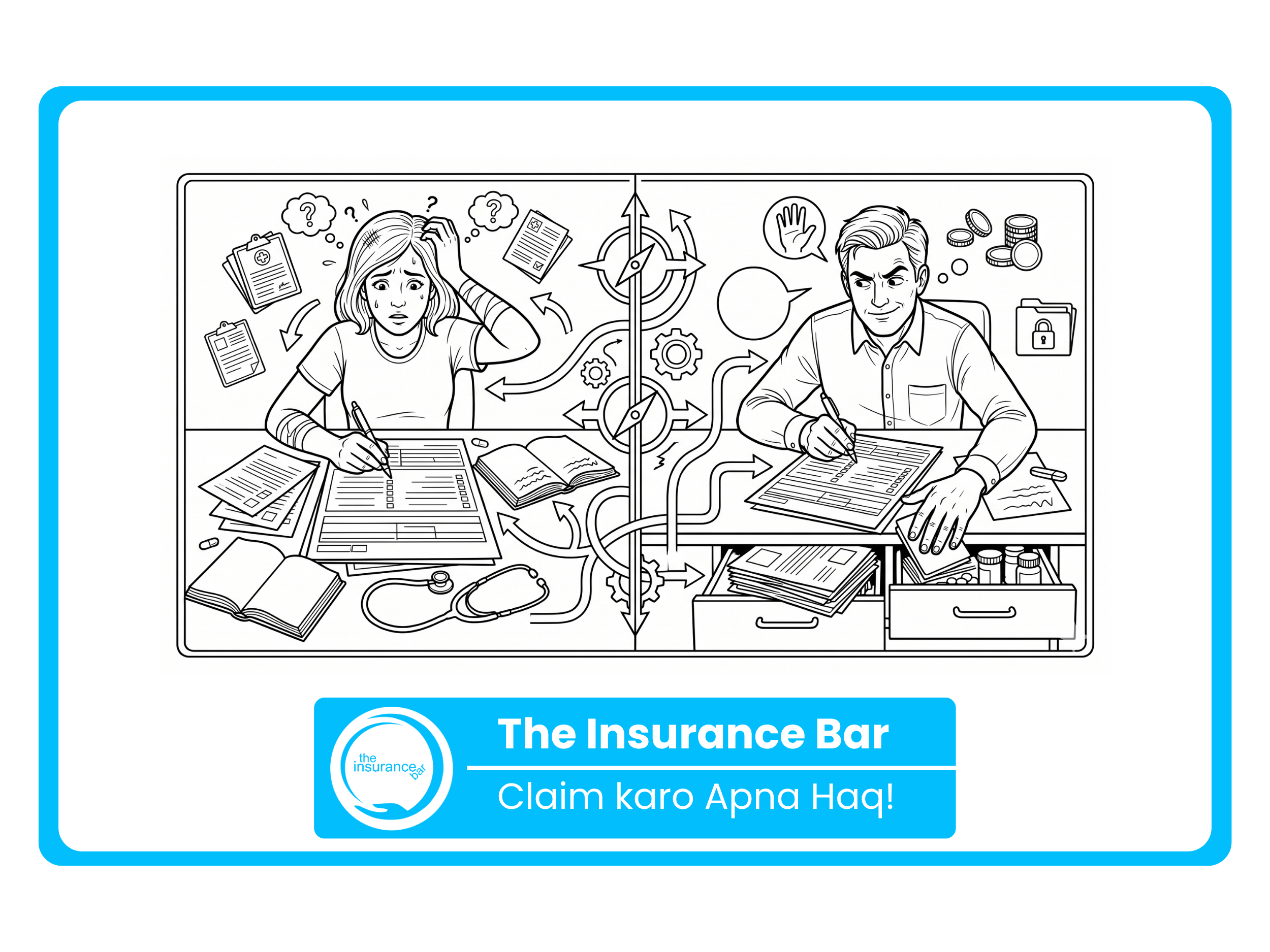
    Three complex labels now hang over his situation: Pre-Existing Disease (PED), non-disclosure, and misrepresentation. The core question becomes: if a customer genuinely did not know or understand their condition, how should the claim be classified?

    Understanding PED, Non-Disclosure, and Misrepresentation

    Insurance providers operate using highly specific risk models and technical guidelines.According to IRDAI, a Pre-Existing Disease (PED) is a medical condition, ailment, or injury that was diagnosed by a physician, or for which medical advice or treatment was recommended, within 36 months prior to the start of the policy. Even if the customer didn’t fully understand it, it can still be medically classified as pre-existing.

    Non-disclosure occurs when a customer does not mention a past illness or diagnosis. This can be completely innocent—where the customer was unaware or forgot—or it can be material.

    Misrepresentation, however, is a much more serious issue. It means the customer actively gave wrong information or hid a severe condition they knew about. This is treated as a severe breach and can lead to policy cancellation.

    How Insurers Assess Unintentional Omissions

    When a customer genuinely did not know about their condition, the situation requires careful analysis. Medically and legally, the disease is only considered a PED if a physician diagnosed or treated it within the 36-month lookback period prior to policy inception. 

    Legally and contractually, if there is no evidence that the customer understood the diagnosis, the case leans towards innocent non-disclosure, not fraud. However, insurers might still deny the claim. They are simply applying rigid rules to complex medical histories.

    Insurers may argue that any pre-policy diagnosis is “material” and should have been declared. Sometimes, they might even stretch the assessment towards misrepresentation, suggesting the policyholder “ought to have known”. This is why, even without knowingly hiding anything, there remains a real risk of denial.

    The Escalation Path and Your Ultimate Ally

    If an insurer denies or underpays a claim based on these complex classifications, there is a clear escalation path in India. Policyholders can approach the Insurer’s Grievance Cell, the IRDAI Grievance Redressal, the Insurance Ombudsman, and eventually Consumer or Civil Courts.

    Navigating this path requires expert knowledge. At The Insurance Bar (www.theinsurancebar.com), we act as the ultimate ally for policyholders facing these disputes. Our experts help clarify these misunderstandings by proving that an omission was innocent rather than fraudulent.

    We also invoke the moratorium and materiality tests. If you have completed five or more years of continuous cover, IRDAI’s moratorium bars repudiation for non-fraudulent omissions. We challenge harsh classifications professionally, pushing back when insurers try to jump directly to misrepresentation.

    Whether your claim has been delayed, rejected, or short-settled, we are here to ensure you get the fair settlement you rightfully deserve. We decode your policy and advocate for your rights without any upfront costs. Visit The Insurance Bar to get expert claim assistance today.

    Frequently Asked Questions (FAQs):

    What is the difference between a PED and misrepresentation?

    A Pre-Existing Disease (PED) is a condition diagnosed or treated by a physician within 36 months before your policy began, regardless of whether you fully understood its implications at the time. Misrepresentation, on the other hand, involves actively giving wrong information or deliberately hiding a serious condition you knew about.

    Can my claim be rejected if I genuinely didn’t know about a medical condition?

    Yes, insurers may initially reject the claim based on non-disclosure, treating any pre-policy diagnosis as material. However, if the omission was innocent and you did not consciously hide the information, there are strong legal and regulatory steps to challenge the decision.

    How does the 5-year moratorium rule protect policyholders?

    If you have completed five or more years of continuous health insurance coverage, the IRDAI moratorium rule protects you from claim rejection based on non-disclosure. Insurers cannot void the policy for omitted information unless they can explicitly prove deliberate fraud or concealment.

  • Why Health Insurance Claims Are Rejected Due to Waiting Periods (And How to Fight Back)

    Why Health Insurance Claims Are Rejected Due to Waiting Periods (And How to Fight Back)

    Many policyholders are familiar with the concept of a waiting period in health insurance. Insurers often specify that certain planned treatments or surgeries are only covered after a fixed timeframe from the policy’s start date.

    But problems arise when insurers apply these clauses too broadly, turning an emergency hospitalization for a serious infection into a frustrating health insurance claim rejection.

    When an Emergency Hospitalization is Reduced to a Waiting Period Dispute

    Consider cases where policyholders are rushed to the hospital with life-threatening conditions like urosepsis and pyelonephritis. In such emergencies, life-saving procedures like cystourethroscopy and DJ stenting can result in medical bills running into lakhs of rupees. 

    However, the insurer repudiated both claims, stating the admission was for “bilateral DJ stent removal”—a procedure they claimed fell under a 12-month waiting period exclusion.

    The Real Issue Behind Waiting Period Rejections

    Most policyholders understand that waiting periods apply to specific pre-existing conditions or planned procedures. However, confusion hits hard when medically necessary procedures or infection-related emergencies are blindly categorized under these waiting period exclusions.

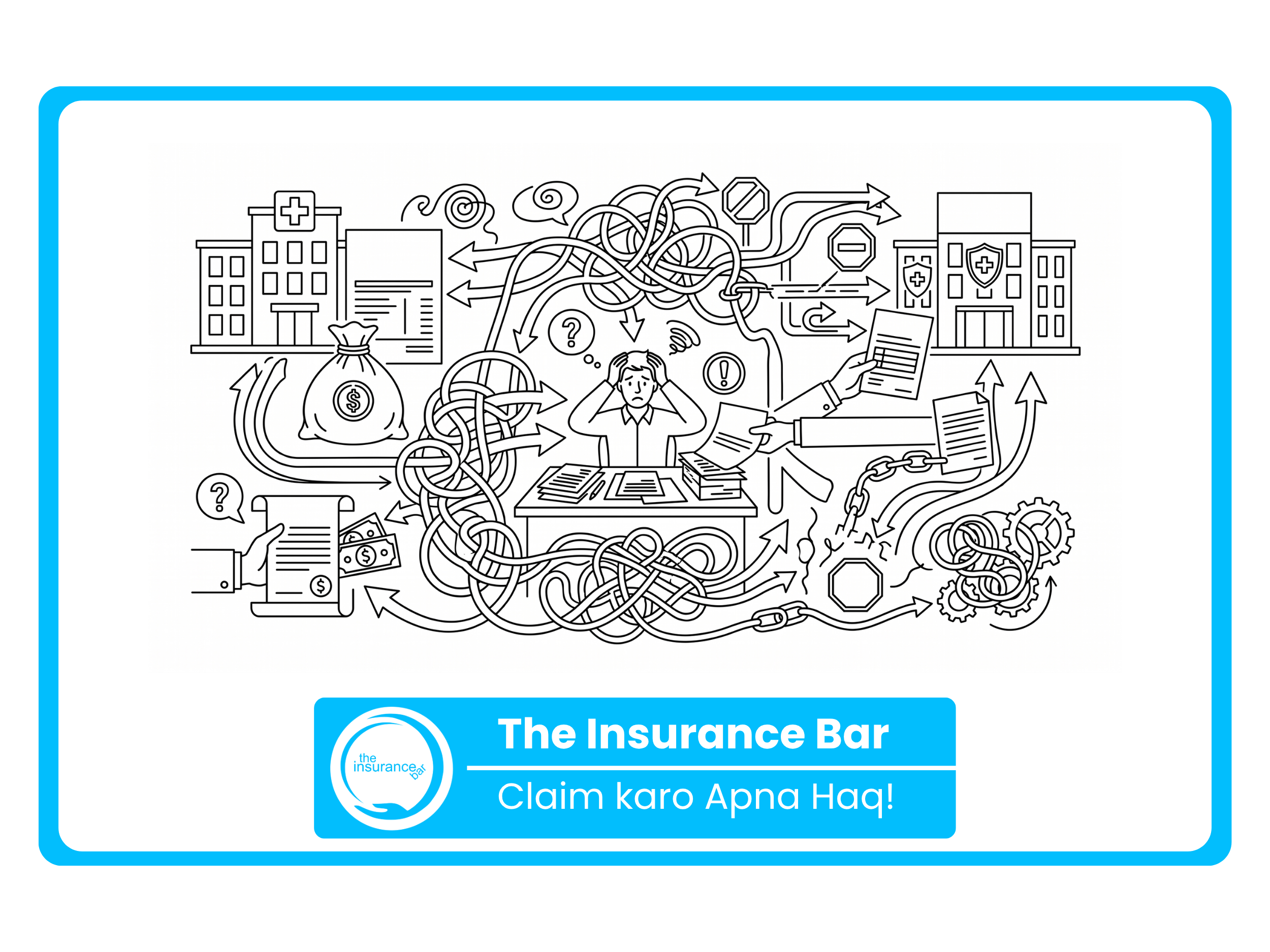
    In many of these disputes, insurers mechanically reduce a complex emergency hospitalization to a single procedure code. For families already dealing with high medical bills and recovery, denying coverage by ignoring the serious underlying infection feels both unexpected and unfair.

    Fighting Back Against Broad Waiting Period Interpretations

    A rejected hospitalization claim is not the end of the road. To successfully fight back, you must focus on whether the insurer fairly assessed the complete medical reality before applying the exclusion.

    This requires a careful examination of hospital records, diagnostic reports, procedure papers, and the medical timeline to demonstrate the true severity of the emergency.

    When Mrs. Shah approached The Insurance Bar, the strategy was to challenge this narrow interpretation before the District Consumer Disputes Redressal Commission in Mumbai. By presenting the full medical background, policyholders can prove the hospitalization was for significant complications, not just a standard waiting period procedure. Claim Karo Apna Haq.

    Learn how The Insurance Bar helps policyholders navigate complex medical evidence and fight unfair claim rejections to secure the compensation they deserve.

    Frequently Asked Questions (FAQs):

    Can an insurer reject an emergency hospitalization under a waiting period clause?

    Yes, insurers sometimes mechanically apply waiting period clauses to emergency treatments by narrowly categorizing the entire admission under an excluded procedure code. However, if the underlying issue was a serious medical complication or infection, this interpretation can often be contested.

    What documents do I need to fight a waiting period claim rejection?

    You need to present the complete medical background to prove the reality of your treatment. This includes your hospitalization records, diagnostic reports, procedure papers, claim documents, and your exact policy wording.

    What should I do if my emergency health insurance claim is unfairly denied?

    You should first file a grievance with the insurer. If unresolved within 15 days, you can approach the Insurance Ombudsman for a free and faster resolution, or file a formal complaint with the District Consumer Disputes Redressal Commission. 

  • Why Health Insurance Claims Are Rejected for Misrepresentation (And How to Fix Hospital Errors)

    Why Health Insurance Claims Are Rejected for Misrepresentation (And How to Fix Hospital Errors)

    Many policyholders assume that once they honestly disclose their medical details and submit all treatment documents, their health insurance claim will be processed fairly.

    But in reality, even a single incorrect line in a hospital record or discharge summary can sometimes lead to a health insurance claim rejection.

    For policyholders, this can become deeply frustrating, especially when they later try to correct the mistake but still face rejection.

    When a Hospitalization Leads to an Allegation of Misrepresentation

    Cases like these frequently arise for policyholders who hold comprehensive family health insurance policies. 

    In many instances, policyholders are admitted for acute symptoms requiring immediate medical evaluation.  Following evaluation, patients are often diagnosed with conditions like hypertension or urinary tract infections (UTI). 

    After hospitalization, the medical expenses are submitted to the insurer for cashless approval or reimbursement. 

    However, insurers often repudiate such claims, alleging that the insured had an undisclosed pre-existing history of the condition for several years.  They claimed this amounted to a “misrepresentation of facts” simply because the indoor case records and discharge papers allegedly mentioned a past history of hypertension.

    In such situations, obtaining a doctor’s certificate clarifying that the duration mentioned in the discharge summary was a clerical error is the recommended remedy.  Yet, despite reviewing this clarification, the insurer maintained the repudiation.

    What Policyholders Should Know About Medical Paperwork

    One important lesson from such cases is that policyholders should carefully review hospitalization records and discharge summaries whenever possible.

    Even small documentation mistakes can later create severe complications during claim assessment. If a genuine clerical or human error is identified, obtaining prompt clarification from the treating doctor becomes extremely important.

    In many health insurance misrepresentation disputes, the core issue is not intentional concealment by the policyholder, but rather how insurers rigidly interpret inconsistencies in medical paperwork.

    Fighting Back Against Misrepresentation Allegations

    A rejection based on a hospital error is not the final word. To fight back, you must focus on whether the insurer fairly assessed the clarification and surrounding medical records before continuing the repudiation.

    This involves carefully examining hospital records, discharge summaries, doctor clarification certificates, claim documents, policy wording, and email correspondence.

    For wrongfully denied policyholders, the next step is to challenge the repudiation before the Insurance Ombudsman or a District Consumer Disputes Redressal Commission.  The strategy focused on demonstrating that the disputed entry was specifically clarified by the treating doctor, highlighting that clerical errors should be properly examined, and organizing the complete evidentiary record.

    Sometimes, a single mistaken entry in a medical paper can unfairly change the entire direction of a genuine insurance claim. Claim Karo Apna Haq.

    Learn how The Insurance Bar helps policyholders navigate complex medical evidence and fight unfair claim rejections to secure the compensation they deserve.

    Frequently Asked Questions (FAQs):

    Can a hospital error really cause a health insurance claim rejection?

    Yes, insurers often rely heavily on discharge summaries and indoor case records. A single clerical error, like an incorrect duration of a medical history, can lead insurers to allege misrepresentation of facts and deny the claim.

    What should I do if my discharge summary has a mistake?

    You should carefully review your documents and immediately obtain a prompt clarification or certificate from the treating doctor explaining that the entry was a human or clerical error.

    How can I fight a rejected health insurance claim due to misrepresentation?

    You must organize your complete evidentiary record, question the insurer’s review of documents, and escalate the issue to the Insurance Ombudsman (which typically resolves disputes within 30 days) or the District Consumer Disputes Redressal Commission. 

  • Why Personal Accident Claims Are Rejected After Death (And How to Fight Back).

    Why Personal Accident Claims Are Rejected After Death (And How to Fight Back).

    Most people believe a personal accident insurance policy is straightforward. If a person dies because of an accident, the grieving family receives the insurance amount.

    But in reality, many personal accident claim rejections happen because insurers interpret medical reports differently.

    If a post-mortem report mentions terms like “cardiorespiratory arrest,” “clot in heart,” or “embolism,” insurers often classify the death as sickness-related rather than accidental. For families, this creates a deeply troubling issue where they must navigate complicated insurance terminology on top of their loss.

    When an Accident Later Turned Into a Claim Dispute

    Consider the case of Mrs. Ruchi Kumar. In October 2022, her husband met with an accident and suffered multiple serious injuries, including fractures to his ribs and right leg, which required surgery and hospitalization.

    About a month later, he suddenly developed severe breathlessness and passed away. The post-mortem confirmed the presence of a clot in his heart.

    When Mrs. Kumar filed a personal accident death insurance claim of ₹93,48,400, the insurer rejected it. They stated the death was caused by “cardiorespiratory arrest due to pathological clotting in heart,” treating it strictly as a sickness-related event.

    The Real Issue Behind Such Claim Rejections

    In many accident-related deaths, the immediate medical cause recorded in a post-mortem does not tell the complete story.

    Serious fractures, surgeries, and prolonged immobilization after accidents can medically increase the risk of blood clots developing in the body. If those clots travel to the lungs or heart, it leads to sudden collapse. This means the final medical event may appear cardiac in nature, even though the underlying trigger remains the original accident.

    That distinction becomes crucial in disputed accidental death insurance claims. Relying strictly on isolated wording in a final medical report gives insurers leverage to deny valid payouts.

    Fighting Back Against Personal Accident Claim Rejections

    A rejected accident claim is not always final. Many policyholders assume that once an insurer rejects a mediclaim, nothing further can be done.

    To successfully challenge an unfair denial, you must examine the complete medical timeline instead of relying only on a single line from the post-mortem report. This involves carefully analyzing accident records, hospitalization papers, surgery reports, and doctor certificates to strengthen the evidentiary record.

    When Mrs. Kumar approached The Insurance Bar for assistance, the focus shifted to mapping the sequence from the accident to the hospitalization to the death. By clearly explaining the medical causation involved in clot-related complications after fractures, policyholders can demonstrate how the claim should be accurately assessed.

    Depending on the circumstances, families can challenge unfair claim denials through internal grievance mechanisms, Insurance Ombudsman proceedings, or Consumer Commissions. Claim Karo Apna Haq.

    Learn how The Insurance Bar helps families navigate complex medical evidence and fight unfair claim rejections to secure the compensation they deserve.

    Frequently Asked Questions (FAQs):

    Can an insurer deny an accident claim if the final cause of death was a cardiac arrest?

    Yes, insurers often deny these claims by classifying them as sickness-related events. However, if the cardiac arrest or blood clot was triggered by injuries, surgeries, or immobilization resulting from the original accident, the underlying cause is still accidental and the claim can be contested.

    What documents are needed to challenge a personal accident claim rejection?

    You must look beyond the post-mortem findings. A strong case requires mapping the complete medical timeline using accident records, hospitalization papers, surgery reports, doctor certificates, and policy wording.

    What are my options if my accidental death insurance claim is rejected?

    A rejected claim is not the end of the road. You can actively challenge unfair claim denials by pursuing internal grievance mechanisms, filing proceedings with the Insurance Ombudsman, or presenting the matter before Consumer Commissions.

  • When a Medical Loan Complicates Your Health Insurance Claim.

    When a Medical Loan Complicates Your Health Insurance Claim.

    Medical emergencies often force families to make quick financial decisions. Many patients today rely on medical loans to arrange immediate hospital funds without delaying treatment.

    But what happens when your health insurance claim is rejected simply because the hospital bill was financed through a medical loan?

    This scenario highlights how financing-related technicalities can sometimes block a genuine mediclaim.

    A Genuine Emergency Met With a Technical Denial

    For example, consider a scenario where a patient is admitted for ureteric calculi, finances the treatment with a medical loan, and faces an unexpected claim rejection because the insurer claims the bill was ‘not directly paid by the client. Because Mr. Chaudhary had arranged his treatment costs through a medical loan facility, the claim was denied based on a very strict reading of the policy wording.

    The hospitalisation, diagnosis, and treatment were completely genuine. The method of payment simply created an unintended administrative hurdle.

    Why the Method of Payment Shouldn’t Invalidate Care

    Insurance policies rely on precise definitions, which can sometimes lead to rigid interpretations of how a bill should be settled.

    However, taking a medical loan is a perfectly lawful financial arrangement, not a reason to question the authenticity of medical treatment. Financing treatment through a loan does not invalidate hospital bills or medical expenses. The insured still incurs the cost, even if the lending institution pays the hospital directly.

    When a claim is for genuine medical treatment actually taken by the insured, the payment method alone should not override the basic principles of health insurance.

    Navigating the Resolution Process

    Many policyholders assume that once an insurer rejects a mediclaim, nothing further can be done. In reality, these technical denials can successfully be reviewed and resolved.

    Depending on the circumstances, policyholders can challenge claim denials through internal grievance mechanisms, Insurance Ombudsman proceedings, or Consumer Commissions. The key is presenting highly structured documentation. This includes organizing medical records, hospital bills, financial records like the loan sanction, and all claim correspondence.

    This organized approach helps decision-makers see that the core issue is not fraud or non-treatment, but rather an over-narrow reading of the “payment-by-client” wording.

    Finding the Right Ally for Your Claim

    This is where having an experienced partner makes all the difference. At The Insurance Bar (www.theinsurancebar.com), we act as the ultimate ally for policyholders navigating these exact types of complex administrative roadblocks.

    Whether you are dealing with a claim rejection, a short settlement, or a delay in the claims process, our team helps clarify policy coverages and advocates for fair resolutions. With a 99% success rate and over 10,000 satisfied customers across India, our experts specialize in gathering the right evidence and identifying the strongest arguments to resolve technical disputes.

    Arranging funds during a medical emergency shouldn’t overshadow the simple fact that genuine treatment was taken.

    Learn how The Insurance Bar helps policyholders resolve disputes and secure their rightful settlements. Visit www.theinsurancebar.com to get started.

    Frequently Asked Questions (FAQs):

    Can an insurance claim be rejected if I use a medical loan?

    Claims can sometimes be rejected if an insurer strictly interprets a “paid by client” clause, but financing treatment through a lawful medical loan does not invalidate your genuine medical expenses.

    What should I do if my claim is denied due to payment methods?

    Do not assume the rejection is the final word. Gather your complete medical records, loan agreements, and billing documents, and challenge the decision through internal grievances or a consumer forum.

    How does The Insurance Bar help with technical claim rejections?

    The Insurance Bar thoroughly analyzes your policy documents, gathers the necessary evidence, and professionally represents your case to clarify administrative misunderstandings and secure your rightful compensation without upfront costs.