Author: The Insurance Bar

  • When a Medical Loan Complicates Your Health Insurance Claim.

    When a Medical Loan Complicates Your Health Insurance Claim.

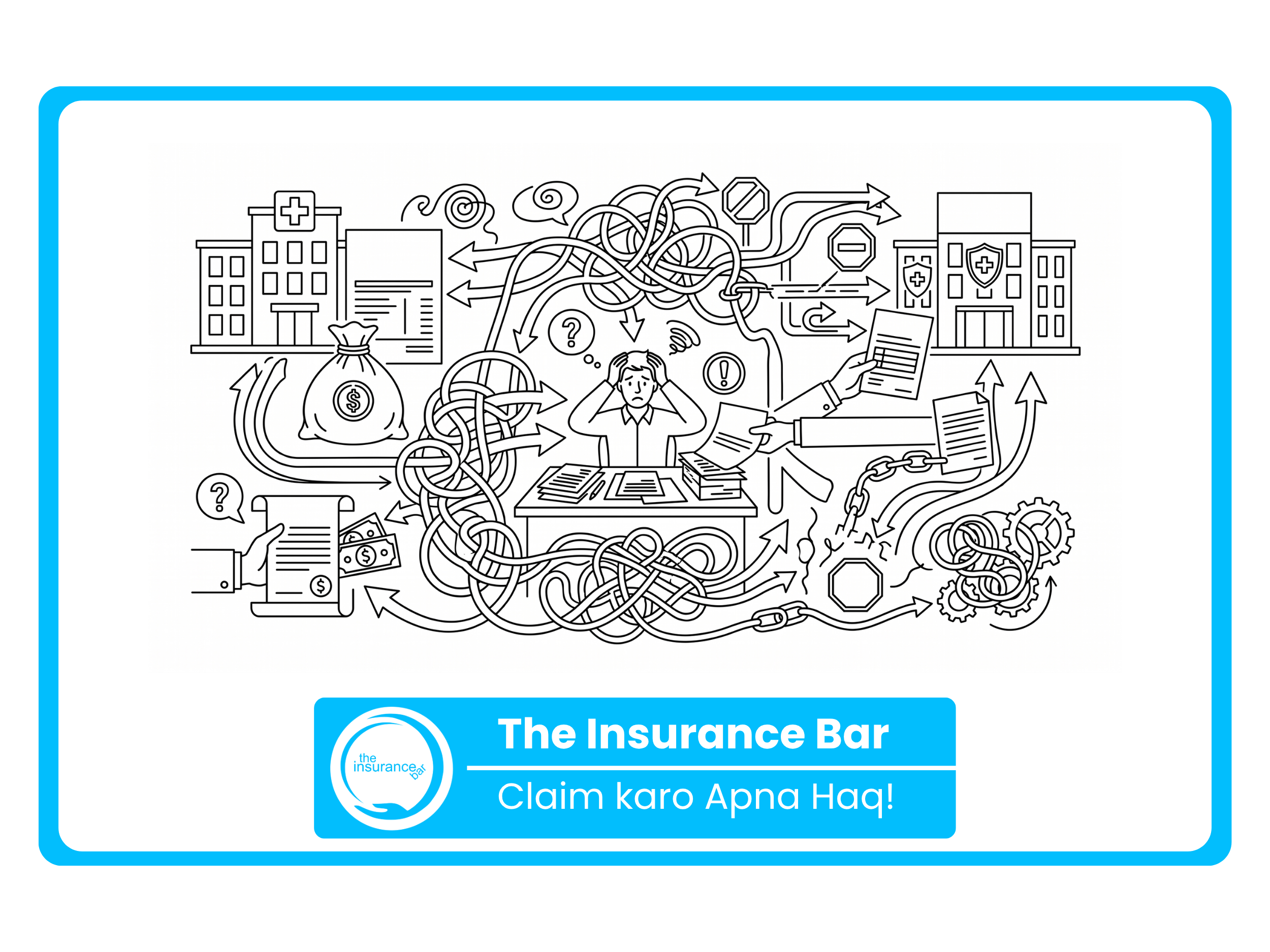
    Medical emergencies often force families to make quick financial decisions. Many patients today rely on medical loans to arrange immediate hospital funds without delaying treatment.

    But what happens when your health insurance claim is rejected simply because the hospital bill was financed through a medical loan?

    This scenario highlights how financing-related technicalities can sometimes block a genuine mediclaim.

    A Genuine Emergency Met With a Technical Denial

    For example, consider a scenario where a patient is admitted for ureteric calculi, finances the treatment with a medical loan, and faces an unexpected claim rejection because the insurer claims the bill was ‘not directly paid by the client. Because Mr. Chaudhary had arranged his treatment costs through a medical loan facility, the claim was denied based on a very strict reading of the policy wording.

    The hospitalisation, diagnosis, and treatment were completely genuine. The method of payment simply created an unintended administrative hurdle.

    Why the Method of Payment Shouldn’t Invalidate Care

    Insurance policies rely on precise definitions, which can sometimes lead to rigid interpretations of how a bill should be settled.

    However, taking a medical loan is a perfectly lawful financial arrangement, not a reason to question the authenticity of medical treatment. Financing treatment through a loan does not invalidate hospital bills or medical expenses. The insured still incurs the cost, even if the lending institution pays the hospital directly.

    When a claim is for genuine medical treatment actually taken by the insured, the payment method alone should not override the basic principles of health insurance.

    Navigating the Resolution Process

    Many policyholders assume that once an insurer rejects a mediclaim, nothing further can be done. In reality, these technical denials can successfully be reviewed and resolved.

    Depending on the circumstances, policyholders can challenge claim denials through internal grievance mechanisms, Insurance Ombudsman proceedings, or Consumer Commissions. The key is presenting highly structured documentation. This includes organizing medical records, hospital bills, financial records like the loan sanction, and all claim correspondence.

    This organized approach helps decision-makers see that the core issue is not fraud or non-treatment, but rather an over-narrow reading of the “payment-by-client” wording.

    Finding the Right Ally for Your Claim

    This is where having an experienced partner makes all the difference. At The Insurance Bar (www.theinsurancebar.com), we act as the ultimate ally for policyholders navigating these exact types of complex administrative roadblocks.

    Whether you are dealing with a claim rejection, a short settlement, or a delay in the claims process, our team helps clarify policy coverages and advocates for fair resolutions. With a 99% success rate and over 10,000 satisfied customers across India, our experts specialize in gathering the right evidence and identifying the strongest arguments to resolve technical disputes.

    Arranging funds during a medical emergency shouldn’t overshadow the simple fact that genuine treatment was taken.

    Learn how The Insurance Bar helps policyholders resolve disputes and secure their rightful settlements. Visit www.theinsurancebar.com to get started.

    Frequently Asked Questions (FAQs):

    Can an insurance claim be rejected if I use a medical loan?

    Claims can sometimes be rejected if an insurer strictly interprets a “paid by client” clause, but financing treatment through a lawful medical loan does not invalidate your genuine medical expenses.

    What should I do if my claim is denied due to payment methods?

    Do not assume the rejection is the final word. Gather your complete medical records, loan agreements, and billing documents, and challenge the decision through internal grievances or a consumer forum.

    How does The Insurance Bar help with technical claim rejections?

    The Insurance Bar thoroughly analyzes your policy documents, gathers the necessary evidence, and professionally represents your case to clarify administrative misunderstandings and secure your rightful compensation without upfront costs.

  • Demystifying “Discrepancies”: What to Do When Your Accident Claim is Denied

    Demystifying “Discrepancies”: What to Do When Your Accident Claim is Denied

    Most people purchase a personal accident insurance policy believing it will act as a reliable financial safety net. They assume it will protect them if an unexpected injury temporarily prevents them from working.

    This coverage becomes incredibly important during recovery periods involving surgery, physiotherapy, or temporary disability.

    But many policyholders are shocked when their accident claim is unexpectedly denied. One of the most common and confusing reasons given by insurers is a “discrepancy in medical documents”.

    The Challenge of Unclear Repudiations

    Insurance providers operate using highly structured verification processes to assess claims. When reviewing a case, they cross-reference every submitted report with strict internal guidelines.

    Sometimes, a claim is rejected due to a perceived inconsistency. While insurers frequently fail to clearly explain the discrepancy, IRDAI regulations strictly mandate that insurers must explicitly state the exact reasons for rejection in writing. 

    For a policyholder who is already exhausted from recovering from an injury, this lack of transparency can be both financially and mentally draining. Insurers aren’t acting maliciously; rather, their rigid procedural rules can sometimes leave customers confused about how to respond.

    A Real-World Knee Injury Dispute

    Consider case studies like that of Mr. Rakshit Jain (as shared by consumer advocacy platforms), who held a Personal Accident Plan… providing temporary total disability coverage of ₹1,00,000 per week. In April 2024, a fall left him with an ACL tear and meniscal injuries in his right knee.

    After conservative care failed, he underwent reconstructive surgery in June 2024, leaving him temporarily disabled for about 8 weeks. He submitted all his MRI reports, hospitalization papers, and doctor certificates for an ₹8,00,000 claim.

    Despite submitting comprehensive medical proof, his claim was repudiated due to an alleged “discrepancy in medical documents”. He was left wondering what more he could possibly provide.

    Turning the Tide on Vague Rejections

    A rejected accident claim is rarely the final word. When a claim is denied based on vague reasoning, the best defense is a meticulously organized medical timeline and professional representation.

    This is where having an ultimate ally makes all the difference. At The Insurance Bar (www.theinsurancebar.com), we act as that trusted partner for policyholders facing health and accident dispute complexities. In Mr. Jain’s case, our experts carefully examined the entire documentary record, from the initial injury to his ongoing physiotherapy advice.

    We helped challenge the repudiation before the District Consumer Disputes Redressal Commission in Mumbai. By demonstrating the absolute consistency of his medical timeline and questioning the lack of transparency in the rejection process, we professionally advocated for his rightful compensation.

    Whether your claim has been delayed, rejected, or short-settled, we are here to ensure you get the fair settlement you rightfully deserve. We decode your policy and advocate for your rights without any upfront costs. Visit The Insurance Bar to get expert claim assistance today.

    Frequently Asked Questions (FAQs):

    Why would my accident claim be rejected for a “discrepancy in medical documents”?

    Insurance companies follow strict verification protocols. If there is a slight inconsistency in dates, missing clarifications in MRI reports, or incomplete doctor certificates, the system may flag it as a discrepancy. Often, this results in a rejection without a clear explanation of what was missing or required.

    What should I do if my insurance claim is rejected with vague reasoning?

    Do not assume the denial is automatically justified. Carefully review the repudiation letter to understand what is being questioned. You have several remedies available to challenge the decision, including internal grievance mechanisms, Insurance Ombudsman proceedings, and Consumer forums.

    How does The Insurance Bar help with rejected claims?

    We serve as your dispute resolution experts, analyzing your policy and medical documents at no initial cost. If we take your case, we professionally represent you to ensure a fair settlement, and you only pay a 15% success fee once we successfully resolve the claim.

  • The Emergency Hospitalization: What to Do When Your Claim is Denied

    The Emergency Hospitalization: What to Do When Your Claim is Denied

    Medical emergencies rarely give families the time to think clearly. When someone suddenly collapses or struggles to breathe, the first instinct is to get them to the nearest hospital as quickly as possible.

    Nobody stops in that moment to check whether the facility is classified as “network,” “non-network,” or an “excluded provider” under their health insurance policy.

    Yet, policyholders are often shocked when their claim is initially rejected for being at an ‘excluded hospital,’ even though IRDAI guidelines mandate insurers to cover life-threatening emergency treatments at such facilities until the patient is stabilized. 

    The Reality of Medical Emergencies vs. Policy Guidelines

    Insurance companies operate using highly specific technical guidelines and established provider networks to ensure standardized care. When a claim is processed, they rely on these strict classifications.

    For planned treatments, checking a hospital’s network status makes perfect sense. But in a sudden crisis, families do not have the luxury of time to verify insurer-approved hospital lists.

    For example, if a patient is rushed to the nearest hospital for a stroke or severe respiratory infection, insurers may initially reject the claim mechanically because the hospital is on the ‘excluded provider’ list. 

    Why Claims Get Denied (And How to Respond)

    Insurance providers are not acting out of malice when they deny these claims. They are simply applying rigid policy wording to complex, high-stress situations.

    However, an immediate emergency treatment cannot logically be judged in the exact same way as a planned hospitalization. Mechanical rejections based on hospital lists fail to account for the medical urgency of the moment.

    When your claim is caught in this bureaucratic disconnect, strong documentation is your best defense. By properly organizing medical records, diagnostic reports, admission timelines, and doctor observations, you can clearly establish that the admission was an unplanned, genuine emergency.

    Your Ultimate Ally in Dispute Resolution

    Many policyholders mistakenly assume that a rejected mediclaim is the final word. In reality, you can challenge these decisions through internal grievance mechanisms, the Insurance Ombudsman, or Consumer Commissions.

    This is where having the ultimate ally makes all the difference. At The Insurance Bar (www.theinsurancebar.com), we act as that ally for policyholders dealing with rejected, delayed, or short-settled claims.

    Our expert team understands the nuances of policy terms and works professionally alongside insurers to ensure fair advocacy. For instance, in cases like Mr. Sharma’s and Mr. Rathore’s, we successfully presented the facts before the District Consumer Disputes Redressal Commission in Thane to challenge the unfair repudiations.

    Whether your claim has been delayed, rejected, or short-settled, we are here to ensure you get the fair settlement you rightfully deserve. We decode your policy and advocate for your rights without any upfront costs. Visit The Insurance Bar to get expert claim assistance today.

    Frequently Asked Questions (FAQs):

    Can an insurer deny my claim if I visit an excluded hospital during an emergency?

    Yes, insurers may initially reject the claim based on strict policy wording and provider network classifications. However, if you can prove it was a genuine medical emergency where immediate treatment was necessary, you have strong grounds to challenge the denial.

    What documents are needed to prove a medical emergency?

    Strong documentation is critical for challenging a denied claim. You should organize hospital admission timelines, doctor observations, emergency symptoms, diagnostic reports, and all relevant medical records to establish the urgency of the situation.

    How can The Insurance Bar help with my rejected claim?

    The Insurance Bar serves as your ultimate ally, carefully examining your policy clauses, medical records, and insurer communications. Our legal and insurance experts help you build a strong case and professionally challenge claim repudiations through the appropriate grievance channels or consumer commissions, all with zero upfront costs.

  • Health Insurance for Genetic Disorders: Who Pays for Lifelong Congenital Care?

    Health Insurance for Genetic Disorders: Who Pays for Lifelong Congenital Care?

    Riya and Karan’s 3‑year‑old daughter, Myra, has just been diagnosed with an inherited metabolic disorder. Her treatment protocol involves regular transfusions, special medical foods, periodic hospital stays, and constant monitoring. Her doctors are clear: “This is lifelong. There is no one‑time cure, only ongoing management.”

    Their first reaction is a hopeful one: “Our health insurance will cover it, right?”

    But as the months pass, they realize a harsh truth. While their policy pays for major hospitalizations, the crushing everyday realities—OPD visits, expensive therapies, and specialized diets—are often excluded, severely capped, or quickly exhaust their sum insured.

    In India, out-of-pocket healthcare expenses account for nearly half of all medical spending. For many genetic and congenital disorders, the compounding costs of chronic care over years can far exceed the cost of occasional surgeries. Sadly, most families never planned for that.

    Where Families Like Riya and Karan Go Wrong

    Navigating insurance with a chronic condition is a steep learning curve. Families often stumble in these critical areas:

    • Assuming “lifelong treatment” equals “lifelong full coverage.”
    • Ignoring OPD and rehabilitation exclusions hidden in the fine print.
    • Underestimating the true, compounding costs of chronic care over a decade.
    • Buying the “cheapest” generic plan rather than one tailored to specific medical needs.

    The Reality Check: What Do Health Insurance Policies Actually Cover?

    Depending on the policy you hold, your financial experience with a congenital or genetic disorder will look very different. Here are the two most common scenarios:

    Scenario 1: Comprehensive Plans with OPD and Chronic-Care Focus

    Premium plans designed with chronic care in mind offer a much wider safety net. These typically include:

    • In-patient hospitalization for major procedures or complications.
    • Day-care treatments such as scheduled transfusions, injections, or enzyme‑replacement therapy.
    • OPD benefits for follow‑up specialist visits, physiotherapy, speech therapy, or nutrition consultations.
    • Restoration benefits that replenish the sum insured once it is exhausted within the policy year—vital when expensive therapies repeat.
    • A quick caveat on medical foods: Some plans offer limited coverage for special dietary supplements, but only if explicitly mentioned as a medical necessity. In the Indian market, these are notoriously difficult to claim, so managing expectations here is key.

    Scenario 2: Basic Hospitalisation-Only Plans (The Most Common)

    Much more commonly, families hold a standard, bare-bones policy:

    • It pays for traditional admissions, surgeries, and basic day‑care procedures.
    • All regular costs—like OPD visits, routine therapies, frequent tests, and special diets—are paid entirely from your own pocket.
    • The child’s genetic disorder is technically “covered,” but in practice, only a tiny fraction of the actual yearly medical expense is reimbursed.

    A Practical Guide to Planning for Lifelong Healthcare Costs

    1. Look Specifically for “OPD-Plus” or Chronic-Care-Friendly Plans

    When choosing or upgrading your policy, explicitly look for coverage for OPD consultations, day-care therapies, and rehab services (physiotherapy, speech therapy). Prioritize these vital features in your policy document over saving a few rupees on your premium.

    2. Check Annual Limits and Restoration Benefits

    Don’t just look at the base cover. Ask your insurer:

    • “Does this plan include restoration of the sum insured, and under what conditions?”
    • “Can the restore trigger more than once in a year, or only upon complete exhaustion?”
    • For high, recurring costs, a larger base sum insured combined with an excellent restoration feature will always beat a small cover with a lower premium.

    3. Understand Waiting Periods for Genetic Conditions

    As per IRDAI guidelines, genetic disorders cannot be permanently excluded. However, you must confirm:

    • The exact waiting period for pre‑existing genetic or congenital disorders.
    • What is covered after that period (inpatient only, or OPD/day-care as well).

    4. Maintain Impeccable Records

    Keep every single OPD bill, therapy invoice, dietician note, and prescription. For plans that allow OPD or day‑care claims, highly disciplined documentation is usually the difference between a swift approval and a frustrating rejection.

    5. Layer Your Coverage Strategically

    Consider adding a Super Top-Up policy to handle massive annual bills once your base sum insured runs out. You might also evaluate Critical Illness covers, but only if they explicitly include your specific condition and pay out a lump sum that is genuinely useful for ongoing chronic care.


    Claim Rejected? Here Are Your Legal Options

    Despite having the right paperwork, insurers sometimes unfairly underpay or deny claims for chronic conditions. If this happens, you have a clear legal and regulatory escalation path in India:

    1. Insurer’s Grievance Cell: Your first step is an internal escalation.
    2. IRDAI Grievance Redressal: Use the Bima Bharosa (IGMS) portal or call center.
    3. Insurance Ombudsman: A powerful, cost-free route for claims up to ₹30 Lakhs.
    4. Consumer Court / Civil Court: The final legal step for larger disputes.

    Reduce the Hassle with The Insurance Bar

    Rather than discovering too late that a “basic” plan barely touches everyday costs, families can align their coverage with the reality of lifelong treatment by partnering with The Insurance Bar.

    We support families like Riya and Karan by:

    • Reviewing existing policies to identify dangerous gaps in OPD, day‑care, therapy, and restoration benefits.
    • Leveraging IRDAI guidelines to prevent insurers from outright denying valid genetic disorder claims.
    • Building and presenting robust claims so that modern treatments and recurring therapies are argued effectively as medically necessary.

    Don’t let the cost of lifelong care drain your family’s future. Work with The Insurance Bar to fight effectively for what you are rightfully owed.


    Frequently Asked Questions (FAQs)

    Does health insurance cover genetic disorders by default in India?

    Yes. As per a landmark IRDAI mandate, health insurance companies can no longer completely exclude genetic disorders from their policies. However, coverage is still subject to standard waiting periods and the specific terms (like OPD limits) of your chosen plan.

    What is the waiting period for congenital diseases?

    Internal congenital diseases (conditions present at birth) are usually treated similarly to pre-existing diseases. The waiting period for genetic or internal congenital disorders is now strictly capped by IRDAI at a maximum of 3 years (36 months). 

    Will my insurance pay for special medical diets or nutritional foods?

    In most standard Indian health insurance policies, dietary supplements, medical foods, and vitamins are excluded unless they are an integral part of an in-patient hospital stay. If your child requires an expensive lifelong medical diet, you must look for premium OPD-plus plans and explicitly check the policy wordings for nutritional coverage.

  • The “Old Report” Trap: Does a Forgotten Diagnosis Mean Your Health Insurance Claim is Dead?

    The “Old Report” Trap: Does a Forgotten Diagnosis Mean Your Health Insurance Claim is Dead?

    Ananya bought a comprehensive health insurance policy at age 30. She filled out the proposal form honestly, ticking “No” for any known heart conditions or genetic disorders. At 37, she suddenly required surgery for a severe heart problem that doctors discovered was congenital (present from birth).

    She filed her claim with confidence. But during the assessment, the insurer’s investigation team dug up an old echocardiography report from seven years ago. Buried in the medical jargon was a single line noting a “mild congenital valve anomaly.”

    Suddenly, Ananya received a terrifying call: “Ma’am, you did not disclose this pre‑existing condition. We are rejecting your ₹6 Lakh claim and cancelling your policy for non-disclosure.”

    Overnight, her fight was no longer just medical—it became a legal battle for her financial survival.

    If you have a congenital disease or an old medical report with an incidental finding, does that mean you “knew” about it? And more importantly, can the insurance company use it against you? Let’s break down the reality of non-disclosure and your rights as a policyholder.

    3 Scenarios of “Pre-Existing” Knowledge: What Actually Counts?

    When an insurer unearths an old medical report, the outcome of your claim depends entirely on the context of that diagnosis.

    1. The Incidental Finding (No Symptoms, No Treatment)

    Suppose Ananya had a scan years ago for a minor chest cold, and the radiologist casually noted a “benign congenital valve variation.” She had no symptoms, was prescribed no medicine, and the doctor never advised any follow‑up.

    Years later, insurers will often try to point to that single line and scream, “Pre-existing condition!” However, courts and the Insurance Ombudsman usually look for material and conscious non‑disclosure. An incidental, untreated finding that had zero impact on your health rarely qualifies as a solid ground for claim rejection.

    2. The Known Diagnosis (Willful Non-Disclosure)

    In this scenario, Ananya clearly remembers a cardiologist telling her seven years ago: “You have a congenital heart defect. We need to monitor this closely.” Yet, when filling out her insurance form, she checked “No” for heart disease.

    Here, the insurer has very strong grounds to allege material—or even fraudulent—non‑disclosure. If the doctor’s notes are explicit and dated before the policy start date, fighting a claim rejection becomes incredibly difficult.

    3. No Clear Medical Proof Before Policy Start

    Ananya has no solid, dated reports from before her policy began—only vague memories of an informal check-up. Without a clear, dated record of diagnosis or treatment prior to the policy inception, it is extremely hard for the insurer to legally prove a pre‑existing disease (PED) existed.


    The Ultimate Shield: IRDAI’s 5-Year Moratorium Rule

    If Ananya finds herself facing a rejected claim, her greatest defense is the Moratorium Period.

    Under the latest IRDAI master circular (effective May 2024), the moratorium period for health insurance in India has been strictly capped at 5 continuous years (60 months).

    What does this mean for you?

    After you have held a health insurance policy continuously for 5 years without a break, your policy becomes “incontestable.” The insurer completely loses the right to reject your claim on the grounds of non-disclosure, misrepresentation, or a pre-existing condition. The only exception to this rule is proven, documented fraud.

    Because Ananya has been paying her premiums for 7 continuous years, her policy has crossed the 5-year moratorium threshold. Unless the insurer can prove she committed intentional fraud, they are legally obligated to pay her claim.


    A Practical Guide: What You Should Do to Protect Your Claim

    When Buying the Policy

    If any old report mentions a congenital, heart‑related, or genetic abnormality—even if you feel completely normal—declare it clearly in the proposal form. Honesty upfront triggers standard waiting periods (now capped at 3 years by IRDAI) but guarantees lifetime peace of mind.

    When You Discover Old Reports Later

    If, years after buying your policy, you uncover an old diagnosis that was never declared, do not hide it. The safest step is to inform your insurer in writing at your next renewal. This establishes “good faith” and ensures your Moratorium protections are evaluated fairly.

    If Your Claim is Rejected for Non‑Disclosure

    Do not panic. Collect all old and new medical records, doctor statements, and evidence proving that the earlier finding was either:

    1. Purely incidental and untreated.
    2. Not clearly explained to you in a material way by a medical professional.
    3. Protected under the 5-year Moratorium Rule.

    Claim Rejected? Here is Your Legal Escalation Path

    If an insurer unfairly denies or underpays your claim based on a flimsy “old report,” here is the standard escalation path in India:

    1. Insurer’s Grievance Cell: File a formal complaint citing the exact IRDAI rules (like the Moratorium period) they are violating.
    2. IRDAI Bima Bharosa (IGMS): Register your complaint directly on the regulatory portal.
    3. Insurance Ombudsman: A highly effective, free-of-cost quasi-judicial body for disputes up to ₹30 Lakhs.
    4. Consumer Court: The final step for larger, complex financial disputes.

    Fight Back with The Insurance Bar

    Insurance companies have entire legal teams dedicated to finding reasons to reject claims. You shouldn’t have to fight them alone. The Insurance Bar levels the playing field for policyholders.

    We can help you by:

    • Reviewing old medical reports to assess whether a condition is truly “pre‑existing” in a legal, material sense.
    • Drafting transparent disclosure notes that keep you honest without unnecessarily sacrificing your coverage rights.
    • Building a watertight case using IRDAI’s 5‑year moratorium rule and Supreme Court precedents on genetic/congenital issues to force insurers to pay what they owe.

    Instead of panicking every time an insurer digs up an old test, work with The Insurance Bar. We know how to “Claim Karo Apna Haq” (Claim Your Rights) when congenital or genetic labels are weaponized to cut off your coverage.


    Frequently Asked Questions (FAQs)

    What is the IRDAI Moratorium Period for health insurance?

    As of April 2024, the IRDAI has set the moratorium period at 5 continuous years (60 months). After this period, an insurance company cannot reject your claim for non-disclosure or misrepresentation of a pre-existing condition, except in cases of proven fraud.

    Can an insurance company reject a claim for a genetic disorder?

    No. Following a landmark 2020 IRDAI mandate, health insurance companies in India cannot outright deny a claim or exclude coverage purely because a disease is genetic or congenital. However, standard waiting periods (up to 3 years) still apply.

    What happens if I honestly forgot to declare an old surgery or diagnosis?

    If it was an honest mistake and you have continuously renewed your policy for more than 5 years, you are protected by the Moratorium Rule. However, if your policy is less than 5 years old, the insurer may reject the claim or ask you to pay additional premiums depending on the severity of the undisclosed condition.

  • Medical Borders vs. Policy Borders: Does Your Insurance Cover Congenital Surgery Abroad?

    Medical Borders vs. Policy Borders: Does Your Insurance Cover Congenital Surgery Abroad?

    Meera and Arjun’s 4-year-old son, Kabir, has a rare congenital heart defect. After multiple surgeries in India, his cardiologist delivers a life-changing update: “The most advanced corrective surgery for this exact defect is only being performed in a few specialized centers in Europe.”

    The estimate from the European hospital arrives: €30,000 to €45,000 (approx. ₹28–42 Lakhs), depending on ICU stay and complications.

    Relieved that there is hope but terrified of the bill, Meera’s first thought is: “Our Indian health insurance covers his congenital condition, and we have a ₹50 Lakh cover. It should pay for the surgery anywhere in the world… right?”

    Unfortunately, for many Indian families, this is where the “Global Coverage Trap” begins.


    The Three Types of Coverage: Knowing the Difference

    When it comes to treatment outside India, not all policies are created equal. Here is how the three most common insurance types handle congenital cases:

    1. Standard Indian Health Policy (with “Global Rider”)

    Most high-end Indian policies now offer a “Global Cover” or “Worldwide Care” rider.

    • The Catch: These usually cover only major illnesses (like cancer or neurosurgery) and are often restricted to planned treatment for specific listed conditions.
    • Congenital Status: Even if you have the rider, if the congenital condition was diagnosed before you added the rider, it may be subject to a fresh waiting period.

    2. International / Global Health Plans

    These are premium products (like those from Bupa, Cigna, or specialized Indian HNI plans) designed for “Global Citizens.”

    • Territorial Scope: Truly worldwide.
    • The Catch: They involve rigorous underwriting. If you try to buy this after a child is diagnosed with a congenital defect, the insurer will likely exclude that specific condition or charge a massive “loading” premium.
    • Pre-Authorization: These plans require “Prior Authorization.” If you admit Kabir without an approved “Guarantee of Payment” (GOP), you could be left footing the entire bill.

    3. Travel Insurance (The “Emergency Only” Mirage)

    Many families mistakenly think their travel insurance will help.

    • Reality Check: Travel insurance is strictly for unforeseen emergencies (like a sudden accident or heart attack while on vacation). It explicitly excludes planned surgeries, elective procedures, and almost all pre-existing or congenital conditions.

    Why “Perfect” Planning Can Still Lead to a Claim Denial

    Meera was diligent. She ensured Kabir’s condition was declared, waited out the 3-year waiting period, and maintained continuous coverage. Yet, she still faces a high risk of denial for treatment abroad due to these hidden barriers:

    • Territorial Exclusions: Most standard Indian policies are “India-only.” Even if the surgery is life-saving, the insurer is not contractually bound to pay for a hospital in Munich or London.
    • Non-Network Overseas Hospitals: Global riders often require you to use their specific network of international hospitals. If the world’s best surgeon for Kabir is in a non-network facility, your claim might be rejected.
    • Planned vs. Emergency Classification: If your policy only covers “Global Emergency,” and you fly to Europe for a scheduled surgery, the insurer will categorize this as “Planned/Elective” and deny the claim.
    • Currency Fluctuations & Sub-limits: Policies may have a cap on “Room Rent” or “Doctor Fees” based on Indian standards (e.g., ₹10,000/day). In a European ICU, where costs can exceed €2,000 per day, these sub-limits will leave you with a massive out-of-pocket deficit.

    How to Protect Your Family Before You Fly

    If you are considering treatment abroad for a congenital or genetic disorder, follow these professional steps:

    1. Audit the “Territorial Scope”: Check your policy document for the phrase “Geography Covered.” If it says “India Only,” your ₹1 Crore cover is effectively zero once you cross the border.
    2. Verify the “Global Rider” Fine Print: Ensure “Congenital Internal Diseases” are not listed in the permanent exclusions of the global benefit section.
    3. Get a “Medical Necessity” Letter: Have your Indian cardiologist document that the specific surgery cannot be performed in India. This is a powerful tool when arguing with insurers.
    4. The Pre-Authorization Rule: Never fly out without a written “Pre-Authorization” or “No Objection” from your insurer.

    How The Insurance Bar Can Help

    Medical borders are global, but insurance policies are often anchored to the ground. The Insurance Bar helps families bridge this gap by:

    • Policy Auditing: We map your existing Indian and global covers to identify exactly where the “coverage holes” are for congenital care abroad.
    • Appeal Drafting: If your claim for overseas treatment is denied, we analyze the rejection letter against IRDAI regulations and international insurance logic to build a technical appeal.
    • Pre-Auth Guidance: We help you present the “Medical Necessity” of the foreign surgery to the insurer before you leave, reducing the risk of a post-surgery surprise.
    • Regulatory Support: We guide you through the Insurance Ombudsman or IRDAI escalation if the insurer is unfairly using territorial clauses to block a life-saving surgery.

    Don’t wait until you are in a foreign ICU to discover your policy has “India-only” blinkers on. Partner with The Insurance Bar and ensure your child’s health isn’t limited by a border.


    Frequently Asked Questions (FAQs)

    Does Indian health insurance cover surgery in the USA or Europe?

    Only if you have a specific “Global Cover” or “Worldwide” rider/plan. Standard policies are restricted to hospitals within the Republic of India.

    Can I buy global insurance after a congenital diagnosis?

    It is difficult. Most global insurers will treat the diagnosis as a Pre-Existing Disease (PED). You may face up to a 36-month waiting period (the maximum allowed under current IRDAI rules for Indian policies), or if applying for an international non-IRDAI plan, the condition may be permanently excluded.

    What is “Medical Tourism” coverage?

    Some modern policies offer a benefit for “Treatment Abroad” if the surgery is not available in India. However, this usually requires a certification from a medical board and prior approval from the insurer.